The AI Revolution Is Already Here – And It’s Practical
Let’s cut through the noise: AI chatbots aren’t just futuristic tech anymore – they’re practical tools delivering real results for small businesses today. While tech headlines love to focus on cutting-edge innovations and hypothetical use cases, thousands of small business owners are already using AI chatbots to solve everyday problems, streamline operations, and drive tangible growth.
This isn’t about preparing for some distant AI future. It’s about the practical applications that are working right now, helping businesses like yours thrive in an increasingly competitive landscape.
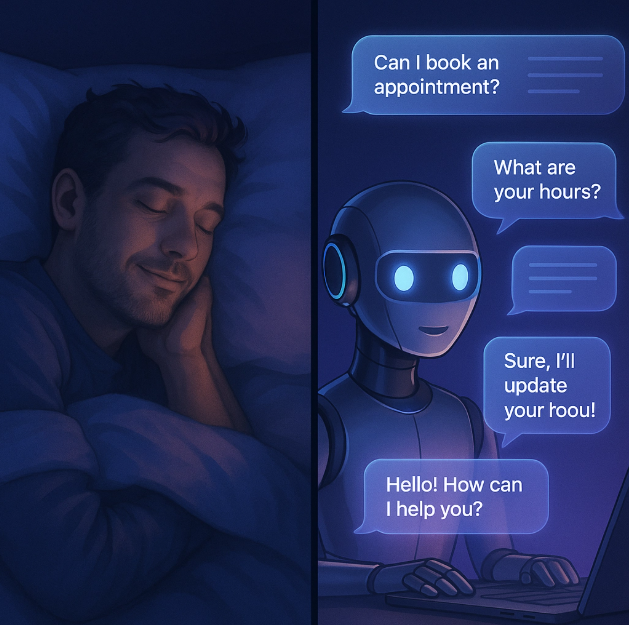
24/7 Customer Support Without the Overhead
One of the most immediate benefits of AI chatbots is their ability to provide round-the-clock customer service without the hefty price tag of staffing a call center or keeping team members on late shifts.
Modern AI chatbots can:
- Answer frequently asked questions about your products, services, or business hours
- Process simple transactions and bookings
- Collect customer information for lead generation
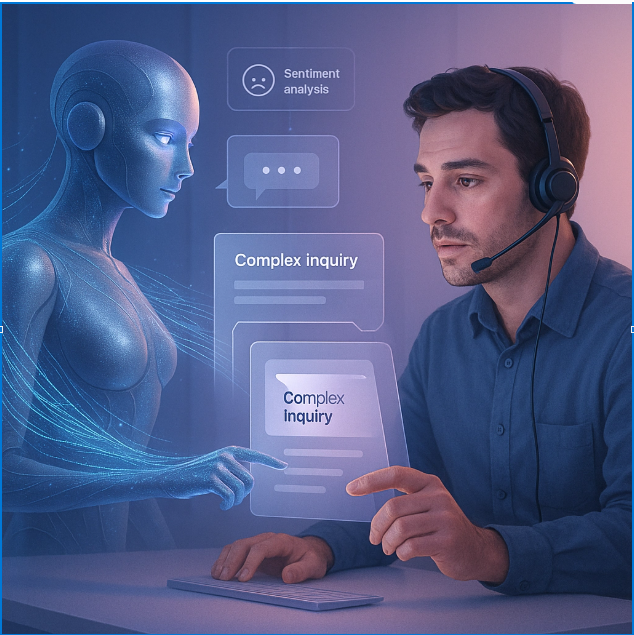
- Route complex issues to the right human team member
- Provide instant responses, even at 2 AM on a Sunday
A local massage therapy business we worked with implemented a simple AI chatbot that handles appointment scheduling and basic service questions. The result? A 35% reduction in phone calls during business hours and a 22% increase in after-hours bookings that would have otherwise been lost. Their receptionist now focuses on providing personalized service to in-person clients rather than juggling phone calls.
Cost Efficiency That Makes Financial Sense
Let’s talk dollars and cents. The math on AI chatbots is becoming increasingly compelling for small businesses:
The Real Numbers
- The average customer service representative costs $35,000-$50,000 annually (plus benefits)
- A typical small business AI chatbot subscription ranges from $30-$300 per month
- Many chatbots can handle hundreds of simultaneous conversations, something impossible for human teams
This isn’t about replacing your human team – it’s about empowering them to focus on high-value work while automation handles the repetitive tasks. One e-commerce client we worked with estimated their chatbot handles what would require 2.5 full-time employees, saving approximately $87,500 annually while improving response times from hours to seconds.
Small businesses are especially benefiting from:
- Reduced staffing costs for routine customer interactions
- Lower training expenses (your chatbot never forgets its training)
- Elimination of human error in providing standard information
- Ability to scale service during busy periods without hiring temporary staff
Data-Driven Insights You Can Actually Use
Modern AI chatbots don’t just talk to your customers – they learn from every interaction, creating a goldmine of actionable business intelligence.
Practical Ways Small Businesses Are Leveraging Chatbot Data:
- Identifying Product Knowledge Gaps: When customers repeatedly ask similar questions, it reveals information missing from your website or marketing materials.
- Spotting Emerging Trends: A sudden increase in questions about a specific product feature might indicate a market shift or new customer need.
- Optimizing Business Hours: Analysis of when customers are most actively seeking assistance can help you adjust staffing or operating hours.
- Refining Marketing Messages: The language customers use to describe their problems often differs from industry jargon – chatbot conversations reveal how your customers actually talk.
A boutique clothing retailer discovered through their chatbot data that customers were frequently asking about sustainability practices – information they hadn’t prominently featured. After updating their website and training the chatbot on sustainability messaging, they saw a 15% increase in conversion rates.
From Conversations to Conversions: The Sales Impact
AI chatbots have evolved far beyond basic customer service tools. Today’s intelligent systems are actively driving sales and capturing leads through strategic conversation flows.
How Small Businesses Are Boosting Revenue with Chatbots:
- Proactive Engagement: Modern chatbots don’t wait for questions – they identify browsing patterns and offer assistance at critical decision points.
- Personalized Recommendations: By analyzing browsing history and previous purchases, chatbots can suggest relevant products or service upgrades.
- Abandoned Cart Recovery: Chatbots can reach out to customers who leave items in their cart, offering assistance or incentives to complete the purchase.
- Qualification and Lead Scoring: Not all inquiries are equal. Chatbots can identify and prioritize high-value prospects based on conversation cues.
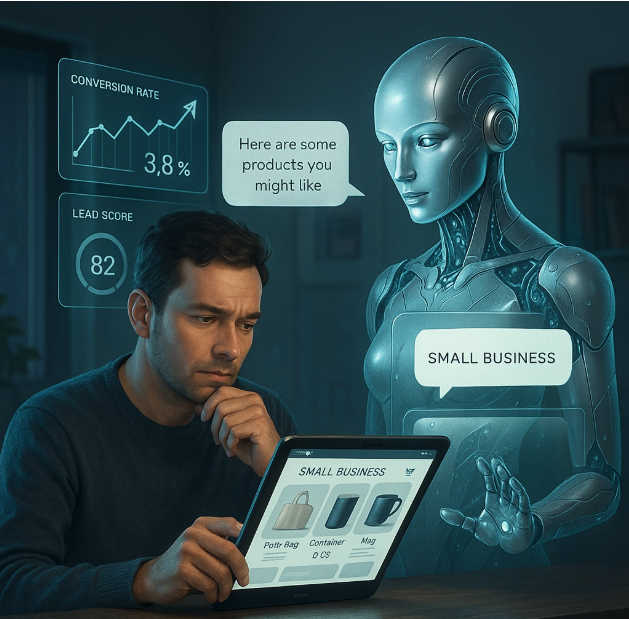
A home services contractor implemented a chatbot that asks qualifying questions about project scope, timeline, and budget. The system automatically schedules high-value prospects for consultations while providing self-service resources to customers with projects outside their ideal range. The result? A 40% increase in consultation bookings and a 25% higher conversion rate from consultation to contract.
Implementation Without the Headaches
The good news: implementing an effective AI chatbot doesn’t require a computer science degree or massive IT budget. The ecosystem has matured significantly, with options suitable for businesses of all sizes.
Practical Implementation Options:
- Template-Based Solutions: Platforms like Intercom, Tidio, and Zendesk AI offer pre-built templates for common small business needs that can be deployed in hours, not weeks.
- No-Code Builders: Visual builders allow you to create conversation flows through simple drag-and-drop interfaces, no coding required.
- AI-Powered Creation: The newest generation of tools can generate chatbot scripts and flows based on your website content and FAQs, dramatically reducing setup time.
- Hybrid Approaches: Many businesses are finding success with AI handling initial interactions and routing to human agents for complex situations.
We recently helped a local accounting firm implement a specialized tax season chatbot that answers common tax questions, schedules appointments, and collects initial client information. The entire implementation took less than two weeks and resulted in a 30% reduction in administrative phone time during their busiest season.
Overcoming Common Challenges
While AI chatbots offer tremendous benefits, implementing them effectively does come with challenges. Here’s how small businesses are addressing the most common hurdles:
Challenge: Limited Knowledge Base
Solution: Start small with your most common customer questions, and continuously expand your chatbot’s knowledge. Many platforms now include analytics that identify where your chatbot is struggling, allowing targeted improvements.
Challenge: Maintaining Brand Voice
Solution: Modern AI tools allow extensive customization of tone and personality. We’ve helped clients develop chatbot personalities that perfectly match their brand – from professional and straightforward to quirky and conversational.
Challenge: Integration with Existing Systems
Solution: Today’s chatbot platforms offer pre-built integrations with popular CRMs, e-commerce platforms, and scheduling tools. These connections ensure your chatbot can access the information it needs to be truly helpful.
Challenge: Handling Complex Requests
Solution: The best implementations clearly define when a conversation should transition to a human. Creating effective “handoff protocols” ensures customers never feel stuck in an AI loop.
Future-Proofing Your Chatbot Strategy
While this article focuses on practical applications available now, it’s worth briefly touching on emerging trends that small businesses should monitor:
- Multimodal AI: Chatbots that can process and respond to images, not just text, are becoming more accessible. A customer could upload a photo of a product they’re interested in, and the AI can identify and provide information about it.
- Voice Integration: As voice assistants become more prevalent, small businesses will increasingly connect their chatbots to voice channels for seamless customer experience.
- Predictive Support: Advanced systems are beginning to anticipate customer needs based on behavior patterns, reaching out proactively before the customer even asks a question.
- Emotional Intelligence: Newer models are becoming better at detecting customer sentiment, allowing for more empathetic responses and appropriate escalation when a customer is frustrated.
At Go Brightly AI, we help small businesses implement practical chatbot strategies that deliver immediate benefits while building foundations that can incorporate these emerging capabilities as they mature.
Getting Started: Your Next Steps
Ready to move beyond the hype and implement an AI chatbot that delivers real business results? Here’s a simple framework to get started:
- Identify Your Top Use Cases: What are the most common customer questions or interactions that consume your team’s time? These are prime candidates for automation.
- Audit Your Existing Content: Most businesses already have FAQs, product descriptions, and process documents that can form the foundation of your chatbot’s knowledge base.
- Choose the Right Platform: Consider your technical resources, integration needs, and budget. Many platforms offer free trials so you can test before committing.
- Start Small and Iterate: Launch with a focused set of capabilities, measure results, and expand based on success. This approach minimizes risk and accelerates time-to-value.
- Combine AI with Human Oversight: The most successful implementations maintain human supervision, especially in early stages, to identify improvement opportunities.
Conclusion: Practical AI for Real Business Growth
AI chatbots have crossed the threshold from emerging technology to practical business tool. The small businesses seeing the greatest impact are those focusing on specific, measurable outcomes rather than implementing AI for its own sake.
Whether you’re looking to extend customer service hours, reduce operational costs, capture more leads, or gain deeper customer insights, today’s AI chatbot solutions offer accessible options that don’t require enterprise-level budgets or technical teams.
The question is no longer whether small businesses should consider AI chatbots, but rather which specific applications will deliver the greatest value for your unique business needs.
Ready to explore how AI chatbots could benefit your small business? Contact our team for a free assessment of your specific opportunities and challenges.